Procurement
One PO, one accountability.
Compare two quotes for a 60-tonne finish-machined casting and the integrated one often looks dearer per tonne. Buyers who stop there are reading the wrong number. The savings from a single-source, one-roof supply don’t appear on the line price. They appear everywhere the line price doesn’t — and they’re larger.
Here’s what you actually stop paying for.
You stop paying to move a half-finished part between cities
The conventional route for a large casting is a committee that never meets: one vendor pours, a second heat-treats, a third machines, a fourth inspects. Between each is freight on an abnormal load and a handling event that can damage a part you’ve already paid for. Every transfer is a cost with no line item and a risk with no owner. Under one roof, the casting is poured, normalised, tempered, machined and inspected without leaving the site. The freight between stages simply disappears.
You stop paying for other people’s queues
When your part sits in four vendors’ shops, it’s in four schedules — and in none of them is it the priority. Each queue adds slack, and the slacks compound into the lead time you quietly pad. An integrated source runs one schedule for your part. The time you stop losing to other people’s backlogs is real money on a capex project where the plant can’t run until the casting arrives.
You stop paying for the dispute
This is the expensive one. When a finish-machined casting from separate vendors arrives out of tolerance, the machinist blames the casting and the foundry blames the machining, and you own a stalemate instead of a part. Resolving it costs weeks and often a re-make. With melt, cast, machine and test under one signature, there is one metallurgical record and one party accountable for the finished dimension. There is no seam in the responsibility because there’s no seam in the supply.
You stop paying for rework you didn’t cause
Handoffs don’t just add cost — they add error. A casting spec’d by one company, heat-treated to another’s interpretation, and machined by a third accumulates tolerance drift at every interface. One roof means the people machining the part know exactly how it was cast and treated, and can design the process around the real casting, not a drawing of it. Less rework, fewer surprises, tighter first-pass yield.
What you actually buy
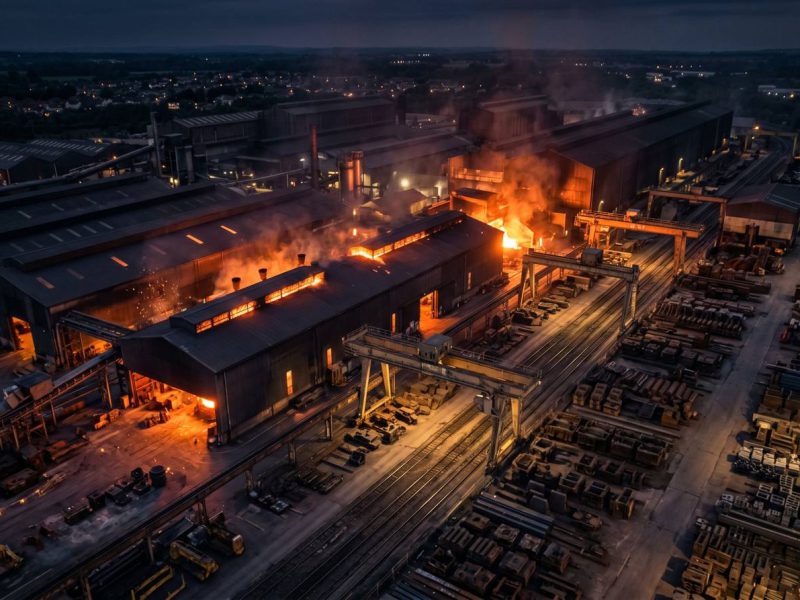
The line price makes it look like you’re buying a casting. With a single integrated source you’re buying something different: a finished, proof-tested part delivered ready to install, with one schedule, one record and one accountable owner. Bhawani runs melt shop, foundry, heat treatment, machine shop and metallurgical lab inside one gate on a 55-acre campus — so the buck never gets passed, because there’s no one to pass it to.