Engineering
The 120-MT problem.
Most people read “single-piece castings to 120 MT” as a marketing figure. It isn’t. It’s a physics threshold, and almost nothing about it is optional. A foundry either has every one of the following simultaneously, or it cannot pour that part in one piece at all. This is why the capability is rare — and why “we’ll fabricate it in sections” is the honest admission of a plant that can’t clear the bar.
Here is what has to be true.
The crane has to lift it — full, and in motion
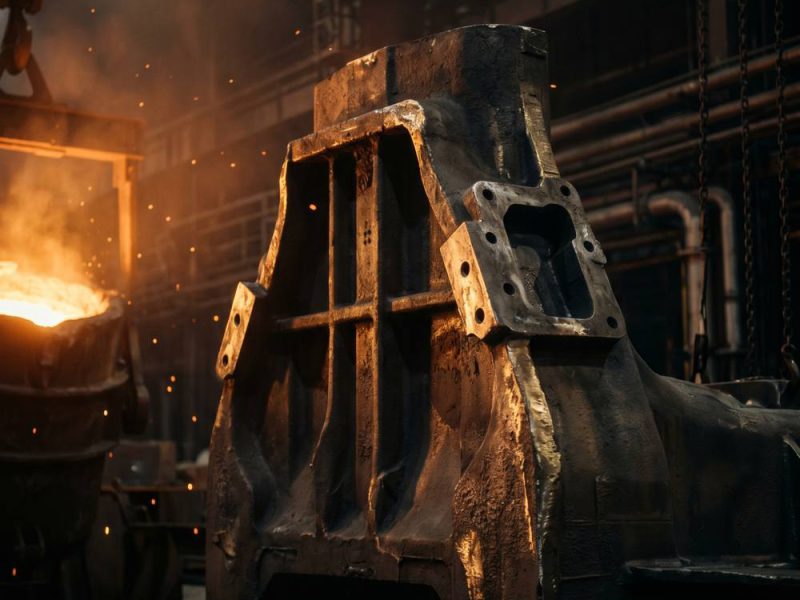
A 120-tonne casting starts as considerably more than 120 tonnes of liquid metal, plus the ladle carrying it. The overhead crane must lift and traverse that load with control, positioning a ladle of molten steel over the mould without a pause — because the metal is cooling every second it hangs. Craneage isn’t a support system here; it’s the constraint that sets the ceiling on what the foundry can ever pour whole. Under-crane a foundry and no amount of melt capacity matters.
The melt has to arrive at once
A single-piece pour cannot be filled in installments. The full mass of liquid metal has to be ready, at temperature, at the same moment — which for a part this size usually means multiple furnaces tapped in coordination into a single pour, chemistry matched across every heat. Melt shy of the requirement and the casting cold-shuts mid-fill; a cold shut in a load-bearing casting is scrap. So the melt-shop question isn’t “how big is your biggest furnace,” it’s “how much correct-chemistry metal can you deliver into one mould in one continuous pour.”
The moulding floor has to hold the part — and the pressure
A mould for a 120-tonne casting is itself a heavy structure. The floor and pit have to carry it, the mould has to resist the ferrostatic pressure of that column of liquid steel without moving, and the gating has to fill it evenly so the metal doesn’t erode the mould or trap gas. This is why moulding-floor scale and pit depth are a hard gate: you cannot pour a part the floor can’t physically contain.
Solidification has to be controlled, not just survived
Once poured, the casting has to freeze in the right order — directional solidification, feeders sized to keep liquid metal available to the last-freezing sections — or it shrinks internally into porosity you’ll never see until it fails. At 120 tonnes the thermal mass is enormous and cools for a long time; getting a sound casting is a metallurgical design problem, not luck.
Then it has to be heat-treated and machined — at the same scale
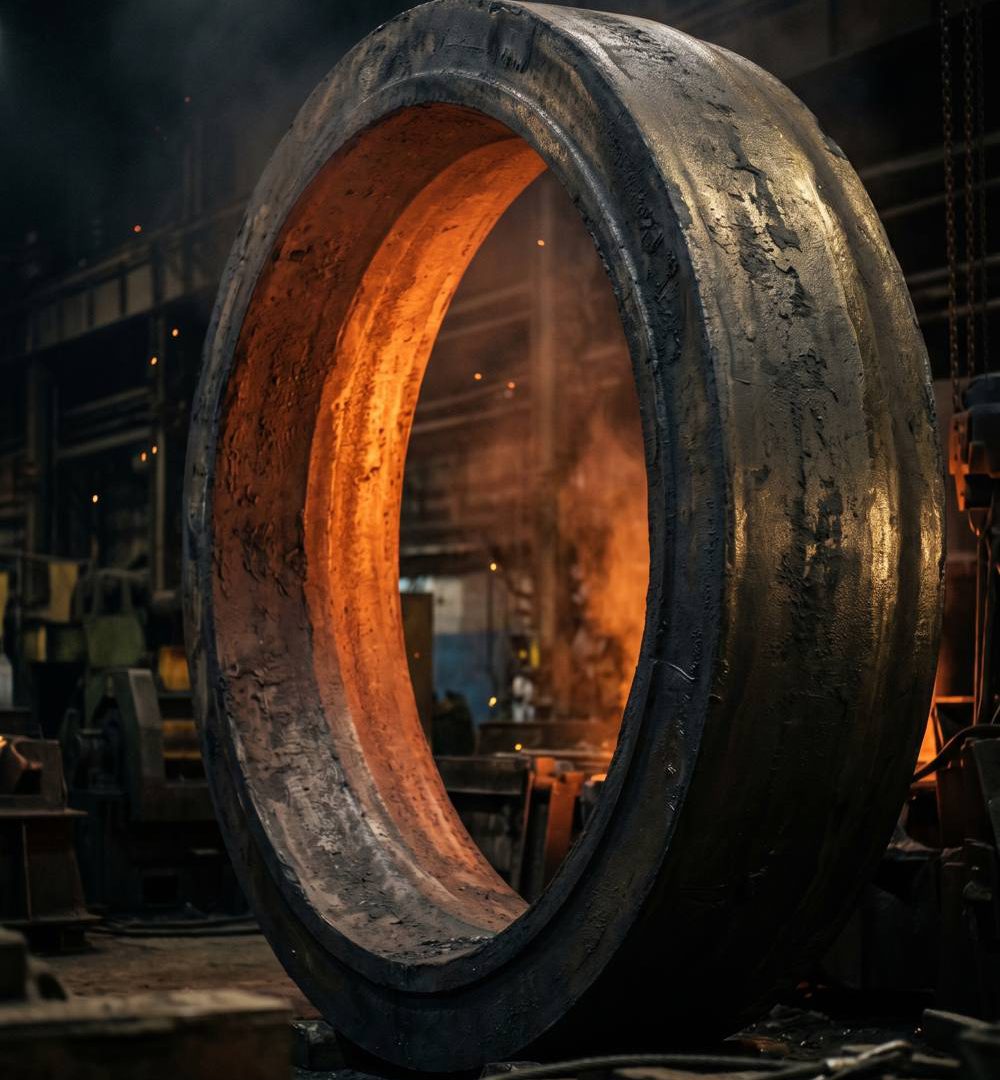
A pour is only half the part. The casting has to fit inside a heat-treatment furnace big enough to normalise and temper it whole, then onto a machine bed long and rigid enough to finish it to print. A foundry that can pour 120 MT but has to ship it out for heat treatment and machining has re-introduced every handoff and every accountability gap the single-piece casting was meant to avoid.
Why this is the wedge, not the slogan
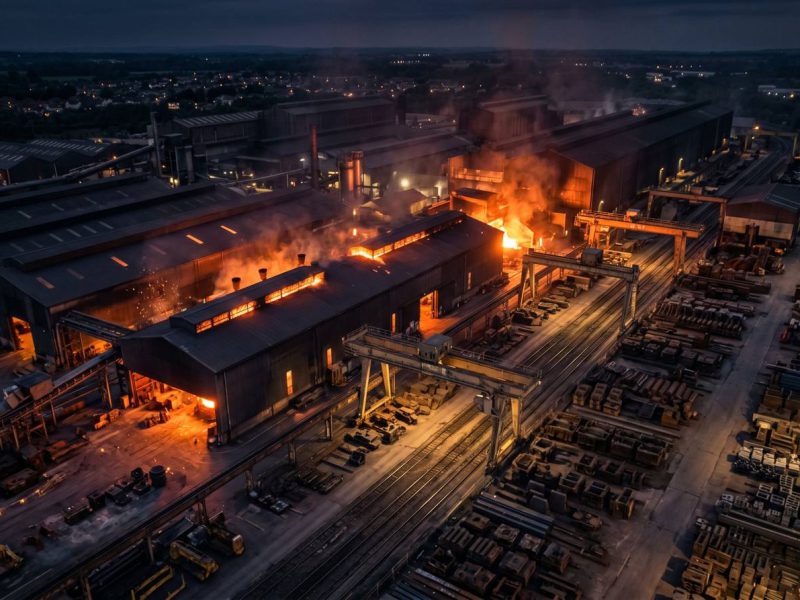
Bhawani clears all of it on one 55-acre campus: coordinated melt, the craneage and moulding floor to pour single-piece steel and iron to 120 MT, in-house heat treatment, and machining to beds of 10 metres and tables to 6 metres — under one owner-led signature. The “120-MT problem” is that each of those capabilities is expensive, and they only produce a saleable part together. Miss one and the honest answer becomes “we’ll section it and weld it” — which is exactly the casting your duty cycle was told to avoid.